Monday, September 17, 2012

Not the Movie: Follow-up

Guy Taylor in yesterday's Washington Times provided some interesting insights on the milieu of the brutal murders in Libya and the simmering violence currently enveloping the apparently still very fluid "Arab Spring."

In the paradox that is the still censored, but somewhat "new and open" Egypt post-Mubarak, remarks quoted by sociologist Saadudin Ibrahim are particularly worth noting.
“The young people who carried out the revolution are not in power,” Mr. Ibrahim said.

“It’s the latecomers who are in power. Some of them, like the Salafis, did not participate in the revolution at all,” Mr. Ibrahim said. “This is an indication of their plan to hijack, control and monopolize.”
Alas, isn't it often so?
7 The king was enraged. He sent his army and destroyed those murderers and burned their city. 8 “Then he said to his servants, ‘The wedding banquet is ready, but those I invited did not deserve to come. 9 So go to the street corners and invite to the banquet anyone you find.’ 10 So the servants went out into the streets and gathered all the people they could find, the bad as well as the good, and the wedding hall was filled with guests. 11 “But when the king came in to see the guests, he noticed a man there who was not wearing wedding clothes. 12 He asked, ‘How did you get in here without wedding clothes, friend?’ The man was speechless. 13 “Then the king told the attendants, ‘Tie him hand and foot, and throw him outside, into the darkness, where there will be weeping and gnashing of teeth.’ 14 “For many are invited, but few are chosen.” (Matthew 22:7-14; NIV)
And though the "critics" of the Salafist/Islamists would seem to have some upper hand in the "new Egypt/Arab World," this critical, non-Muslim, outsider, bystander, etc., sees it a little different.

Nevertheless, may religious extremists, everywhere - and perhaps, as well, some (of us) who stand idly by seemingly (or actually) doing nothing or very little at all - lose their (our) foothold upon the souls of men and women.

Sunday, September 16, 2012

Korean Society, Women, Wonder


Reflecting this evening on passings, plans and possible outcomes.

Do our prayers have much meaning, particularly (or especially), when reduced to rote repetition or verbal recitation?

What of ceremony; whether collective or individual?

For an individual, might that not become routine?
Among a crowd, is that not called a demonstration (i.e., vanity)?

Part of my personal "gulag" (used very loosely) is facing the daily challenge of an "intercultural" relationship.

We, of the West (or merely in it) appreciate our parents and love them, but seem to carry a certain "guilt" when we're not able (or even willing) to care for them, particularly in old age.

And then for those of us immersed, enraptured (or merely) somehow captured by the East, we find much that is beautiful as well as much that seems to comfort or assuage that "guilt."

Have we been selfish (about that)?

Further,  when it comes to raising children, it seems, there are also themes of guilt, unresolved, by both the intracultural as well as the intercultural divide.

Who will raise our children when we cannot? Who do we allow, if we do at all, to "help us" when we practically (or by virtue of choice) cannot?  Does the mother (or woman or even "designated person" in this age) become the indispensable, irreplaceable?

And maybe even as Solzhenitsyn [might have] said (in this context): "It is time in the West to defend not so much human rights as human obligations"?

The "bigger picture," whether culled from faith, hope, religion, the internet or wherever these days may provide us some insight on that.

Here's something from 1995 written (by a Ms. Connie Chung) for a Harvard "bi-annual publication spearheaded by Korean-American undergraduates," that bills (or billed?) itself as Yisei ("second-generation" in Korean).

A (particularly poignant) excerpt:
Korean society, to a large extend [sic], still assumes that "the mother’s first duty is to raise the child, and no one else can substitute for the mother" (Seo Jin Young 139). Thus, even if the number of day-care centers were to increase the mother would still be left feeling guilty. Leaving her child in the care of a substitute, the society tells her, can never equal the quality of her own care. Of course, it may be reasonable to expect that a child growing under the care of strangers or left alone while the mother works may develop problems not faced by "properly mothered" children. However, the widely held notion that the mother alone should be responsible for the well-being of a child’s emotional and educational growth is a prejudiced fallacy indeed. Gong Ji Young, in her novel Go Alone, Like the Horn of a Rhino (based on the well-known tale of a mother who searches for her child kidnapped by a demon) asks, "When the demon took the baby, where was everyone else? The baby’s father? The relatives? How about the society? What was everyone else doing? Why was the woman the only one feeling the pain of eyes gouged out and thorns in her feet? " (Gong Ji Young 231).

Can a mother's unique, special, deep empathy ever be replaced?

Should it?

Why? [must she suffer so?]

Why not? [must I suffer so little?]


Korean mother and child near Seoul; Fall 1945


Because I am small?

Saturday, September 15, 2012

Not The Movie

According to facts compiled last week on the blog of Caroline Glick, Senior Fellow for Middle Eastern Affairs at the Center for Security Policy in Washington, DC, ,  the 9/11 attacks on the US embassies were defintely not about a movie.

Most telling and of possible, urgent interest to the current Administration, especially as it prepares to powow with Muslim Brotherhood Egyptian President Mohamed Morsi next week in New York is this fact:

" . . . as it turns out, the film was screened on an Egyptian Salafist television channel. Obviously the Salafists -- many of whom, like Zawahiri were released from prison by Morsi, wanted to stir up anti-US violence on the eve of 9/11. So if the film is responsible for the violence, a finger needs to be pointed to its chief distributor-- Al Qaida's Egyptian friends and members.
Including Egyptian President Morsi himself?


Sunday, September 2, 2012

In the beginning

In the beginning was the Word, and the Word was with God, and the
Word was God. He was with God in the beginning.

Through him all things were made; without him nothing was made that
has been made.

In him was life, and that life was the light of men.

The light shines in the darkness, but the darkness has not
understood it.

There came a man who was sent from God; his name was John. He came
as a witness to testify concerning that light, so that through him
all men might believe.

He himself was not the light; he came only as a witness to the light.

The true light that gives light to every man was coming into the world.

He was in the world, and though the world was made through him, the
world did not recognize him. He came to that which was his own, but
his own did not receive him. Yet to all who received him, to those
who believed in his name, he gave the right to become children of
God— children born not of natural descent, nor of human decision
or a husband’s will, but born of God.

The Word became flesh and made his dwelling among us. We have seen
his glory, the glory of the One and Only, who came from the Father,
full of grace and truth.

John testifies concerning him. He cries out, saying, “This was he
of whom I said, ‘He who comes after me has surpassed me because he
was before me.’”From the fullness of his grace we have all
received one blessing after another.

For the law was given through Moses; grace and truth came through Jesus Christ.

No one has ever seen God, but God the One and Only, who is at the Father’s side, has made him known.

Now this was John’s testimony when the Jews of Jerusalem sent
priests and Levites to ask him who he was.

He did not fail to confess, but confessed freely, “I am not the Christ.”

They asked him, “Then who are you? Are you Elijah?”

He said, “I am not.”

“Are you the Prophet?”

He answered, “No.”

Finally they said, “Who are you? Give us an answer to take back to
those who sent us. What do you say about yourself?”

John replied in the words of Isaiah the prophet, “I am the voice of
one calling in the desert, ‘Make straight the way for the Lord.’”

Now some Pharisees who had been sent questioned him, “Why then do
you baptize if you are not the Christ, nor Elijah, nor the Prophet?”

“I baptize withi water,” John replied, “but among you stands one
you do not know. He is the one who comes after me, the thongs of
whose sandals I am not worthy to untie.”

This all happened at Bethany on the other side of the Jordan, where
John was baptizing.

(John 1:1-28)

Wednesday, August 29, 2012

Boys, girls, gods, demons


Collaborate or resist?

Little devils . . . 


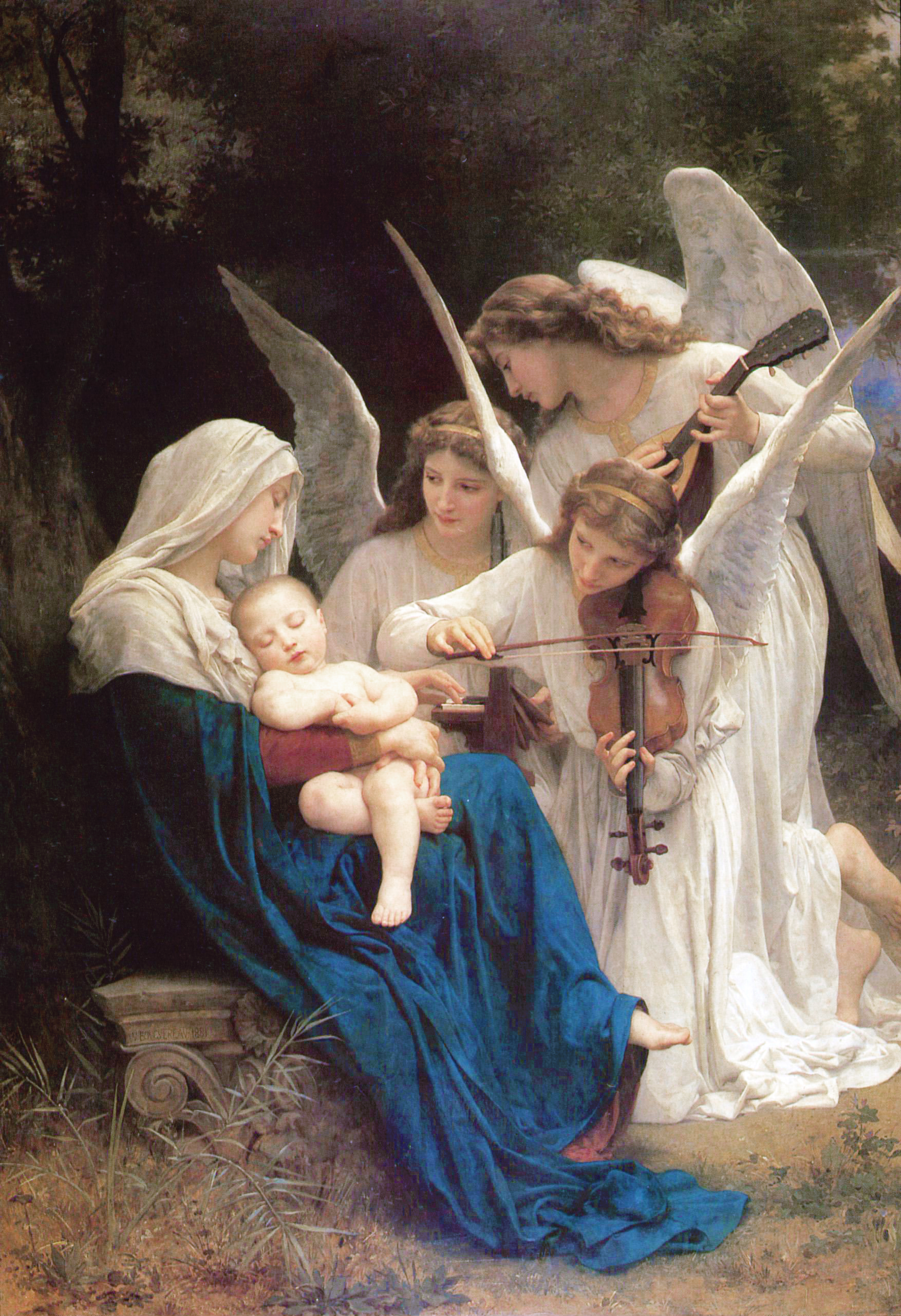
 . . . versus beautiful angels.


Modern sentimentalism versus unwavering absolutism.

Be the change or get changed.

Pay a compliment.

Insult.

Yin/yang.

Devolve into nothingness (mathematically) or choose the narrow path.

Certain (or ambiguous) archetypes, symbols, myths, and/or forms; endure.

Or as Mitya (Dmitri) Karamazov in Dostoevsky's "Brothers Karamazov" stated it, "Without God all things are permitted."

But why is it that in this modern age we (so many of us) still have such a total lack of real consideration (mindfulness) when it comes to "ideas" great and small, much of the time?

It really does seem to be true that "hypotheses tend to devolve into axioms" (or cryptic sound bites), often (even for the above, though oft-quoted).

Let a Russian clarify that for you.

Perhaps rooted in it all is simply the need (or desire) to be nurtured? To be (constantly, faithfully, etc.) "loved"?

For an example, a sketchy study by a couple of economists in 2003 concluded that women are more likely to divorce their husbands, particularly IF they are parents of girls.

And nurturing seems to figure prominently in that reasoning.

As Steven E. Landsburg put it in his Oct 2003 article for Slate magazine on the study, "All over the world, boys hold marriages together, and girls break them up."

An oddly interesting, if axiomatic conclusion.

Elsewhere, the corporate philosophy of "productive conflict toward harmony" has its merits, though figures less well.

But then, a marriage (or family; including brothers and/or sisters) is not like a corporation. [Is it?]

Ultimately, agreement, ever elusive in the best of times, might be found in affirming that none [should] be lonely or without help.

We need each other.

"True" religion somehow maintains a place somewhere within our most basic (or primeval) psyche, heart, hunger and/or quest for the good, the better and the best; despite its consistent failure (s) to lead us (collectively, inclusively) forward.

However, within that hunger and/or quest, maybe someday our everyday uncertainty - whether inherent or inflicted - will become an overtly, humbly acknowledged constant.

Finally, as an afterthought, might Dostoevsky just as easily have written the words of Dmitri as: "With God 'all things' are permitted"?

Friday, August 17, 2012

North Korea High


Kuryong Falls at Mt. Kumgang

North Korean optimism (within its capital, that is) has seldom been so high.

With new love at the top (what else is there?), an Olympic high, news comes also of Uncle Jang going north to China.

According to Chinese state media, Beijing and Pyongyang have agreed to
"accelerate their joint development of two trade zones in North Korea."

"Kim Jong Un's powerful [sic] uncle Jang Song Thaek formalized the agreements Tuesday in meetings with China's Ministry of Commerce."

Jang is a vice chairman of the powerful National Defense Commission and is seen
as a leading economic policy official.

Uncle Jang's six-day visit could (even) be prelude to a visit by Kim.

Chalk it all up to the July surprise wedding honey?

Hope (and true love?), even in the darkest of nights, springs . . .


Kim Jong-un and Ri Sol-ju take a stroll

Thursday, August 2, 2012

Peace through strength

Ronald Reagan is certainly the most modern day statesman to make the concept "peace through strength" his own, but it should be old news that the root of such a stance is an ancient one.

A curious (public) response to how such a philosophy would, might or should apply in the case of the gun violence at the cinema incident in Colorado has me, personally, considering this idea more deeply.

The response, in three words, was basically: "Attack the attacker!"

But does [brute] strength, indeed (and always), deter evil?

For example, could the "joker" at the cinema have been stopped in his tracks if even one person, carrying a concealed weapon (with permit) had been there - and actually taken a shot?

Or, to take this to its most extreme, yet surely most noble context: Remember September 11, 2001.


"Let's roll."


What would "I" have done?